
How to Care for Your Scalp After Sun Exposure
A day outdoors can be restorative in more ways than one. Time in the sun, an afternoon by the water, a long walk, or a weekend spent gardening can all be part of a well-lived routine. Yet environmental exposure can also leave hair feeling less manageable and the scalp feeling out of balance.
That is why after-sun hair care is not only about the lengths of the hair. It begins at the scalp.
At L’Ouest, we believe healthy hair begins with a healthy scalp. The scalp is skin, and like the skin on the face, it benefits from thoughtful cleansing, replenishing moisture, and gentle consistency. A scalp-first approach can help support hair that feels cleaner at the roots, softer through the lengths, and easier to care for over time.
This guide explains how sun, heat, wind, saltwater, and pool water can affect the scalp and hair; how to build an intentional after-sun routine; and when a professional Scalp Facial can become a meaningful part of long-term scalp wellness.
Why Sun Exposure Can Affect the Scalp and Hair
The scalp is often overlooked in sun-care conversations because it is covered by hair. But coverage is not always complete. Parts, hairlines, crown areas, and places where hair is naturally finer may receive more direct exposure. Even when the scalp is shaded, a day spent in heat, dry air, wind, or water can change how both the scalp and hair feel.
Environmental stress does not affect everyone in the same way. Hair density, texture, styling habits, washing frequency, local climate, and time spent outdoors all influence the experience. Still, many people notice that after prolonged time outside, their hair may feel dry, tangled, flat, coated, or harder to style. The scalp may feel less comfortable, or it may seem to become oily sooner than usual.
These shifts are not a reason to overcorrect. In fact, overly aggressive cleansing or a complicated product rotation can make an already unsettled routine feel less balanced. The more useful response is usually simple: observe what changed, cleanse gently when needed, replenish where appropriate, and return to a consistent scalp-first rhythm.
Heat and Dry Air Can Change How Hair Feels
Warm weather can make hair feel different even without direct sun exposure. Dry air and heat can leave the lengths feeling rougher or less flexible, particularly if hair is already prone to dryness. Wind adds friction, which can create tangles and diminish the smooth, manageable feel that many people want from their routine.
For those who live in or visit California, this may be especially familiar. In places such as Ojai, warm sunny days and dry conditions can make a scalp and hair routine feel more seasonal. Elsewhere in the country, summer humidity, high-altitude sun, desert air, or a coastal breeze may create their own version of the same challenge. The goal is not to resist the environment completely. It is to give the scalp and hair considered support before and after exposure.
Saltwater and Pool Water Can Leave a Residue Behind
Ocean and pool days are part of summer for many people, from the California coast to lakes and pools across the country. Yet saltwater, chlorine, minerals, and other environmental residue can remain on the scalp and hair after swimming.
When that residue lingers, hair may feel less soft or more difficult to detangle. At the scalp, it can contribute to a coated, less-fresh feeling. This is one reason a gentle, thorough wash after swimming can be more helpful than simply adding more styling products over hair that has not been properly cleansed.
The purpose is not to strip the scalp or chase an unusually squeaky-clean result. A balanced cleanse helps remove what does not need to remain there, creating a cleaner foundation for conditioning and leave-in care.
Sun Exposure Can Make Existing Scalp Imbalances More Noticeable
If the scalp already tends toward buildup, excess oil, dryness, or inconsistent comfort, environmental exposure may make those patterns more apparent. For example, someone who uses dry shampoo frequently may find that heat and perspiration leave the roots feeling heavier. Someone who washes infrequently may notice that a long weekend outdoors changes their usual schedule. Someone with dry lengths may find that a sunny day makes their hair feel more difficult to manage.
This is where a scalp-first mindset is especially useful. Rather than treating every concern as a hair-length problem, begin with the condition of the scalp. Does it need a gentle cleanse? Has product residue accumulated? Is the routine too harsh, too infrequent, or simply out of step with the season?
The answers are often more practical than a dramatic reset.
The Foundation of After-Sun Scalp Care: Cleanse With Intention
After a day in the sun, the best next step is often a simple one: wash when your scalp needs it.
There is no single washing schedule that works for every person. The ideal frequency depends on scalp oil production, hair texture, activity level, climate, and personal preference. But after swimming, heavy perspiration, or prolonged exposure to wind and dust, a wash can help restore the feeling of freshness and balance.
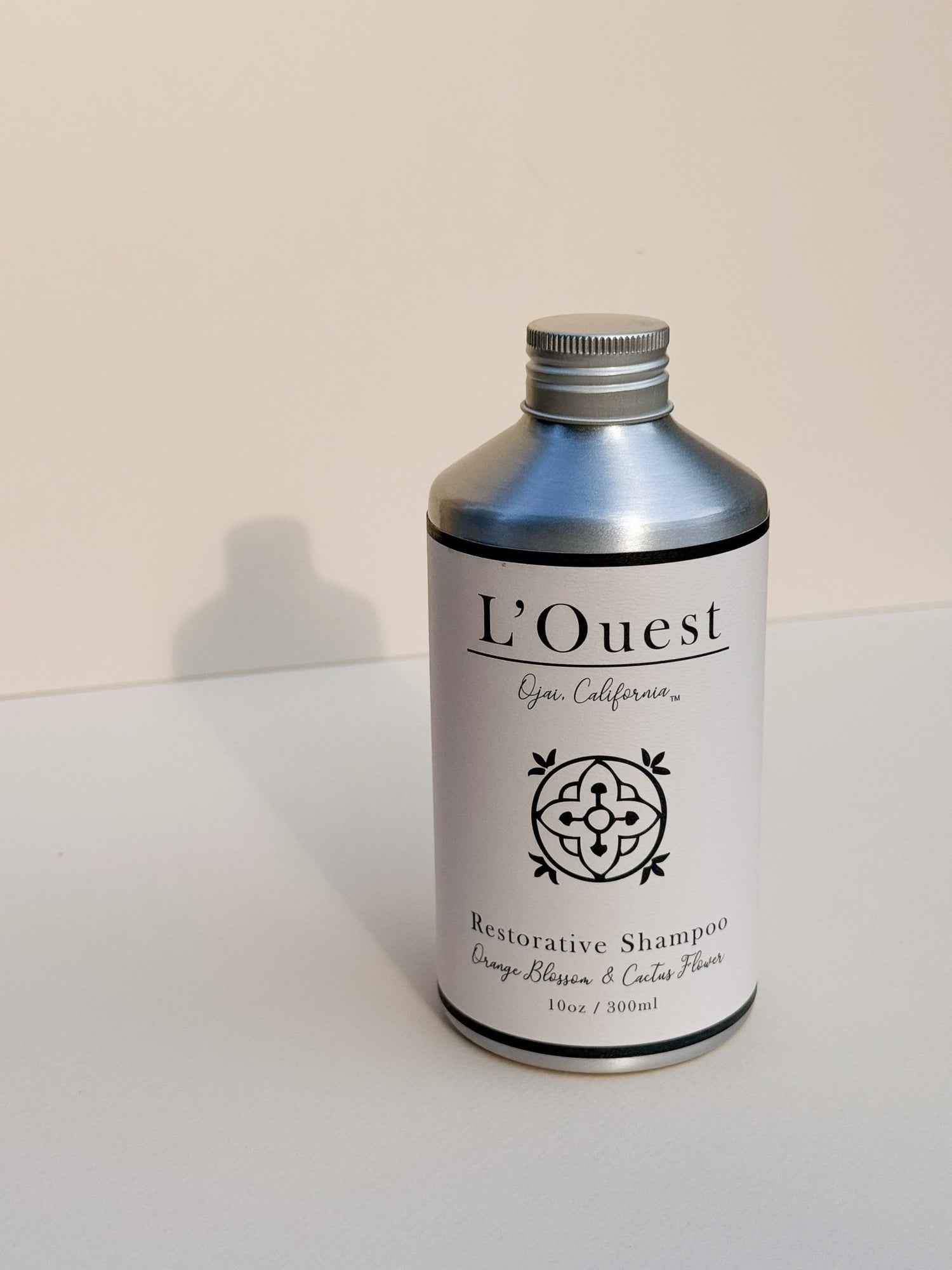
L’Ouest Restorative Shampoo is designed to support a thoughtful scalp-first wash routine. Massage it gently into the scalp with the pads of your fingertips, not the nails. This allows you to focus on the roots, where oil, perspiration, environmental particles, and styling residue tend to collect.
Take a moment rather than rushing through the cleanse. The movement itself matters: work in small sections, especially around the hairline, crown, and nape, then rinse thoroughly. A careful rinse is an understated but important part of managing buildup. Product or residue left behind can make hair feel heavy sooner, even when the initial wash felt effective.
Avoid the Urge to Overwash or Scrub Aggressively
When hair feels dry, coated, or unusually oily after a day outside, it can be tempting to wash repeatedly or scrub with more force. But balance is usually more beneficial than excess.
A harsh approach may leave the scalp feeling temporarily very clean while making the rest of the routine more difficult to manage. Gentle consistency is more sustainable. Use a comfortable water temperature, cleanse with intention, and give the scalp time to settle back into its usual rhythm.
If you do not need to wash immediately, do not feel pressured to do so. A scalp-first routine should be responsive rather than rigid. The point is to cleanse when the scalp feels ready for it—not according to a rule that ignores your actual environment and experience.
Pay Attention to the Hairline and Crown
The hairline and crown are easy to miss, particularly with dense or textured hair. They can also be areas where sunscreen, sweat, dry shampoo, styling products, and airborne residue collect. A few extra moments of gentle cleansing in these areas can make a noticeable difference in how fresh the scalp and hair feel afterward.
If you regularly wear hats, headbands, or protective styles while outdoors, consider how those choices affect your scalp between washes. They can be useful for shade and comfort, but they may also change where warmth, moisture, and product residue collect. Observation is part of an intentional routine.
Replenish the Lengths Without Overloading the Roots
Once the scalp is clean, the next consideration is hair manageability. Exposure to sun, wind, and water can leave the lengths feeling less smooth, especially at the ends. This is where conditioning becomes important.
L’Ouest Restorative Conditioner can be applied through the mid-lengths and ends after shampooing. Focus on the areas that feel most dry, tangly, or difficult to comb through, rather than applying a heavy layer at the root. This supports softness and manageability while allowing the scalp to remain the focus of the cleansing step.
Rinse thoroughly, but do not rush. Conditioning is not merely a cosmetic final step. It can make detangling gentler and help hair feel more cooperative as it dries and is styled.
Use Leave-In Care Where It Serves the Hair
A lightweight leave-in step can be useful after environmental exposure, especially when hair needs help feeling smoother or easier to detangle. L’Ouest Leave-In Conditioner can be worked through damp mid-lengths and ends, concentrating on the areas that need the most support.
Use the amount that suits your hair’s density and texture. Fine hair may benefit from a lighter application, while thicker or drier-feeling hair may prefer slightly more. The aim is not to coat every strand unnecessarily. It is to create a more manageable finish without asking the roots to carry more product than they need.
For many people, this is a helpful moment to simplify. After a long outdoor day, hair does not always need a complex styling process. A gentle wash, conditioner, and considered amount of leave-in care can be enough to make the next day’s hair feel much easier.
Let Hair Dry in a Low-Intervention Way
After sun exposure, the hair may benefit from less friction and heat. Instead of rubbing it briskly with a towel, gently press out excess water with a soft towel or cotton T-shirt. Detangle patiently, beginning at the ends and working upward.
Air drying can be a restful option when it fits your lifestyle and hair type. If you prefer to blow-dry, consider a lower-heat approach and avoid repeatedly passing heat over the same areas. The objective is long-term hair wellness, not a perfectly controlled finish at any cost.
For more guidance, this is a natural opportunity to link to a related article such as “How to Air Dry Hair Without Losing Manageability” or “How to Care for Dry Hair With a Scalp-First Routine.”
Consider the Role of Scalp Treatment in an Intentional Routine
After environmental exposure, the scalp does not always need more. But it may benefit from a dedicated scalp-care step when the routine calls for it.
L’Ouest Scalp Treatment can be incorporated as part of an intentional approach to scalp balance. It is designed for the scalp itself, making it distinct from products meant primarily for the hair lengths. Use it according to your routine and focus on consistency rather than trying to compensate for one outdoor day with an excessive amount of product.
Scalp care works best when it resembles skincare: attentive, measured, and ongoing. A single day in the sun does not determine the health of your hair or scalp. Your broader habits do. The goal is to support a scalp environment that feels clean, comfortable, and balanced across changing seasons.
Build a Routine Around Patterns, Not Panic
If outdoor time regularly changes how your scalp feels, look for a pattern. Perhaps you need to wash after pool days. Perhaps your hair benefits from a little more conditioning during dry California summers. Perhaps you use more dry shampoo during travel and would benefit from being more intentional about cleansing afterward.
These observations can guide a routine that actually fits your life. Haircare should not become a source of anxiety or a complicated set of rules. It should help you respond thoughtfully to the conditions you experience most often.
An effective routine may be as straightforward as this:
-
Cleanse the scalp after swimming, significant perspiration, or noticeable environmental buildup.
-
Condition the mid-lengths and ends to support softness and detangling.
-
Apply Leave-In Conditioner where the hair needs extra manageability.
-
Use Scalp Treatment as a considered part of ongoing scalp care.
-
Adjust your frequency and amount of product based on how your scalp and hair respond.
Make Outdoor Hair Care Part of a Year-Round Routine
It is easy to think of after-sun care as a summer-only concern. In reality,